English
 Ελληνικά
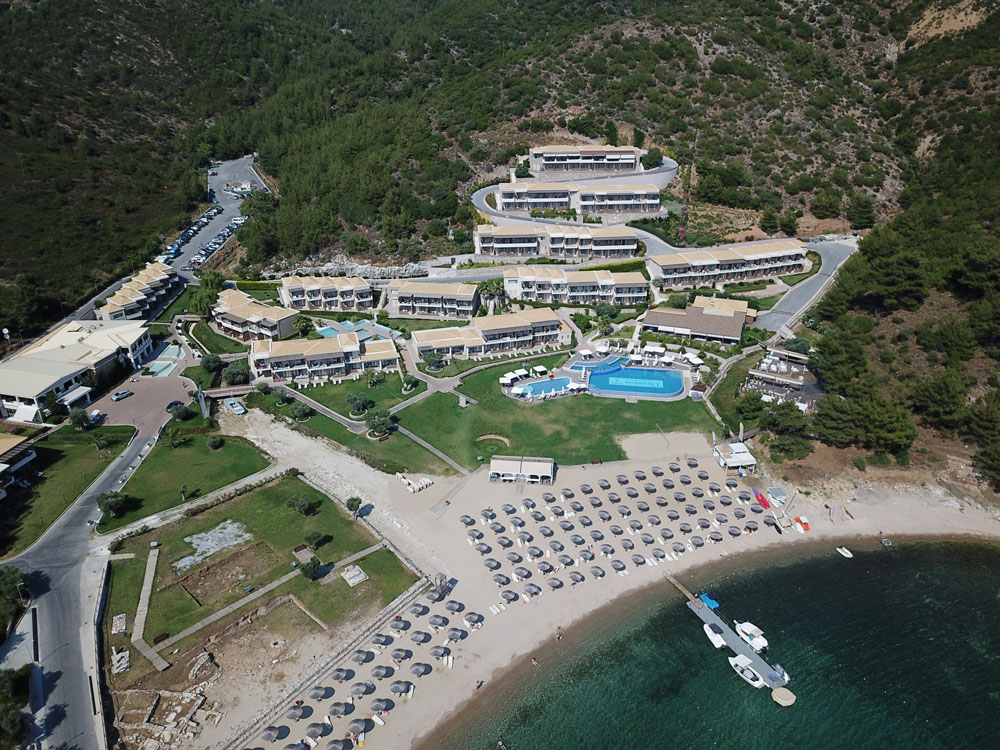
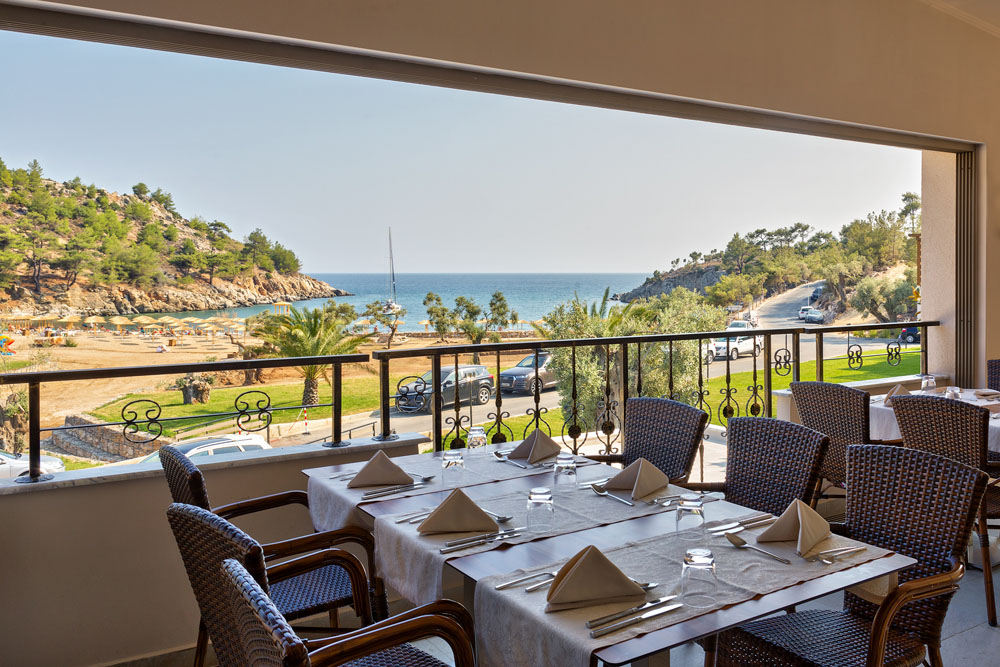
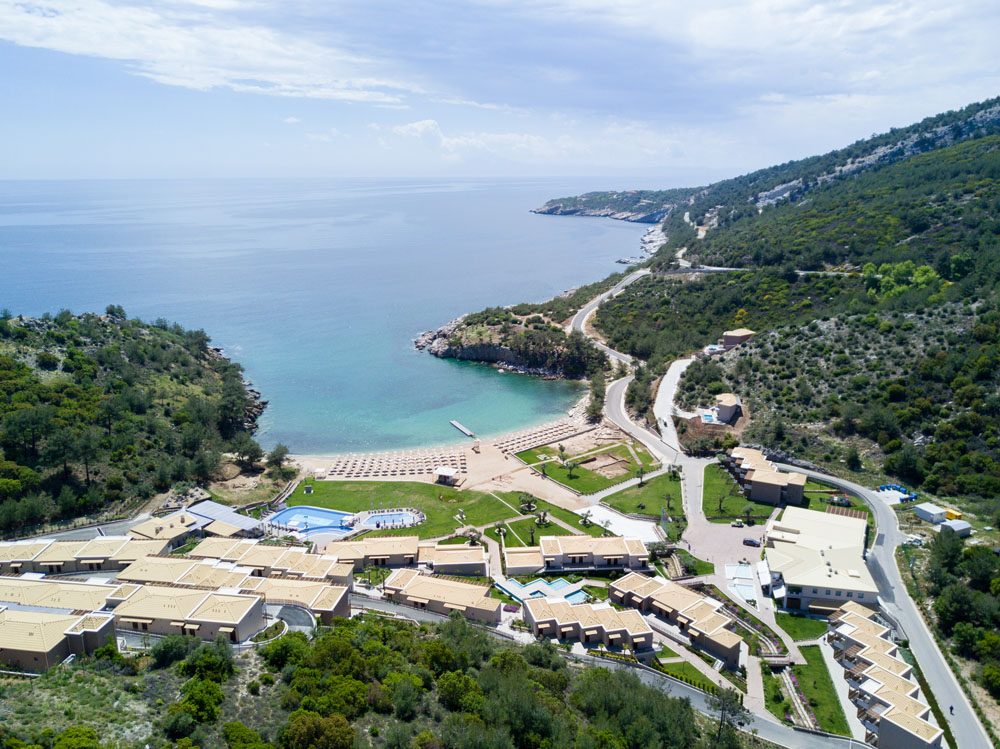
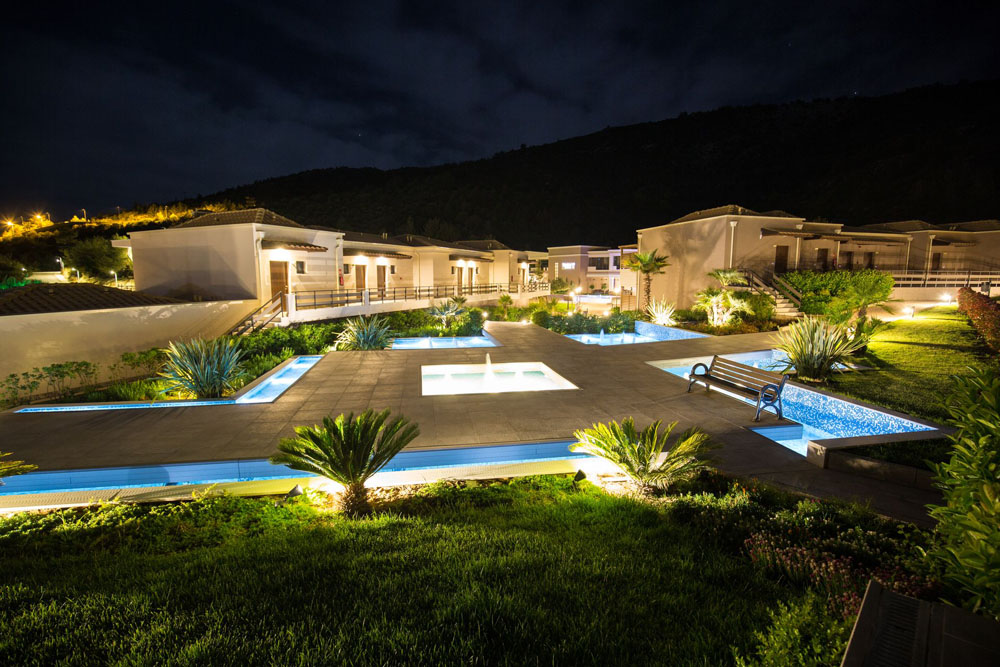
"THASSOS GRAND RESORT" is a seaside hotel, in the Southeastern part of Thassos, at Agios Ioannis-Loukas, designed to meet 5 * requirements. It has 348 beds spread over 162 rooms, suites and independent villas. Amphitheatrically distributed in the natural terrain overlooking the sea. The stadium of about 42 acres, is of particular interest in terms of natural environment but also difficulties in planning because it is crossed by three streams, faces the beach, has a steep slope and is located within the archaeological site of D.D. Θεολόγου. The nearest settlement is at a distance of 7 km.
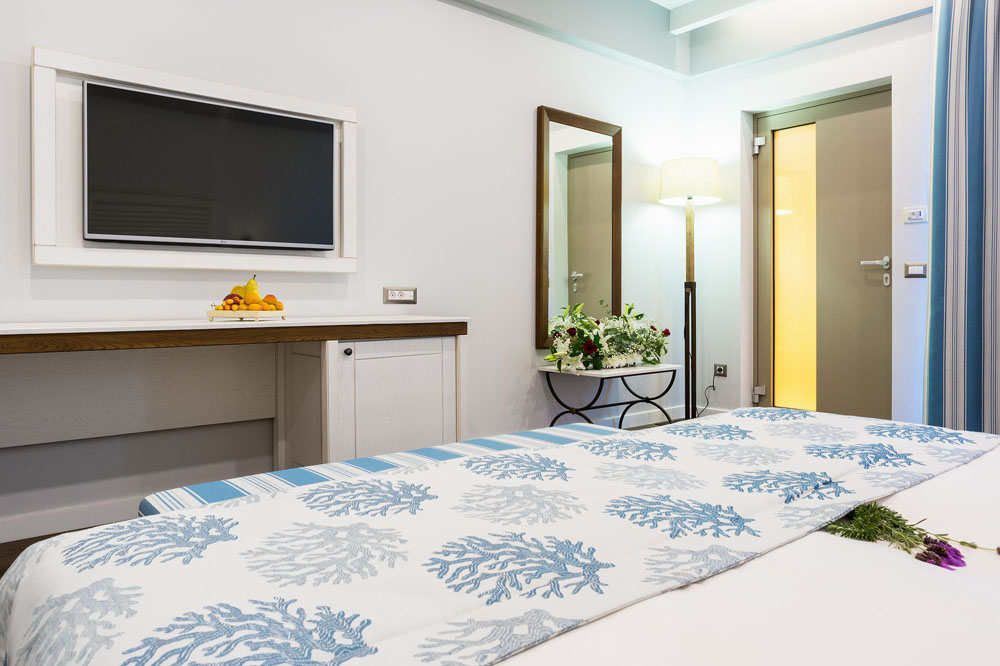
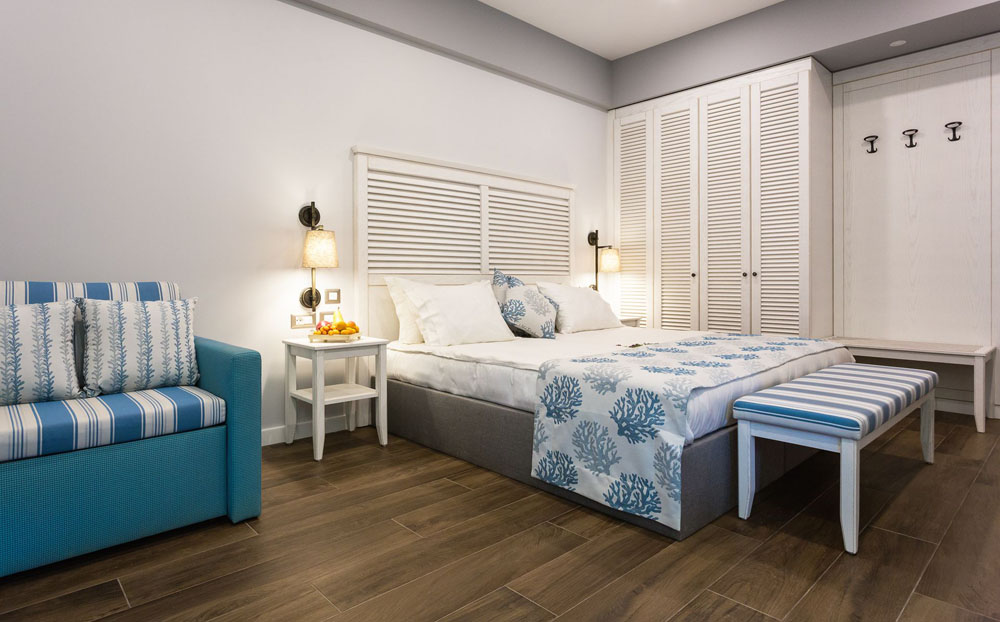
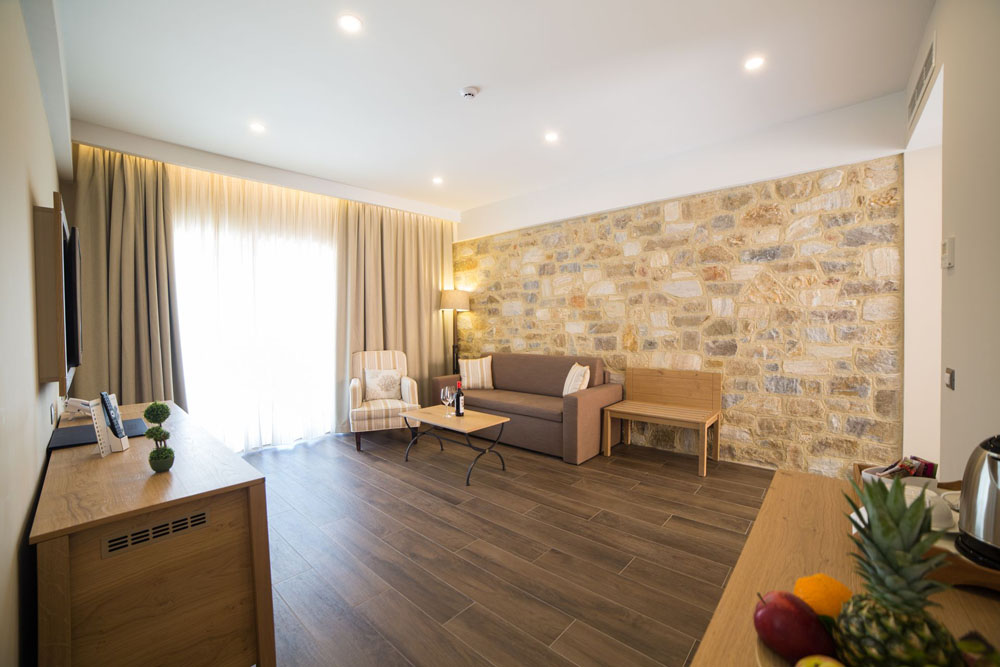
The design based on the allowed construction of approximately 8500m2, had to meet the requirements of the owner. Restrictions were placed on the surface of the field that could be built but also on the shape of the buildings, due to the archeological site, the streams and the beach. The owner wanted to operate with the aim of maximum capacity, meeting 5 * specifications but also the implementation of spaces for entertainment, with emphasis on creating pleasant and spacious rooms with unobstructed sea views.
Thassos needed a high-end unit because while it has a remarkable accommodation infrastructure, the 5 * hotels that operated on the island and could differentiate the offered product were only three with a total capacity of 586 beds. The budget of 11,000,000 euros for the construction of the unit, taking into account the extensive needs of work in the surrounding area, streams and archeological site, was another challenge for the planning and licensing team.
The design had to be approved by the Central Archaeological Council (KAS) and there was a constant presence of the archaeological service during the construction. A presidential decree was issued for the demarcation-arrangement of the streams. Despite the difficulties, the faith in the project and the impeccable cooperation with the EYPATE of the Ministry of Tourism and the tax office of antiquities, with strategic utilization of the data during the design, had a happy ending with full licensing in a relatively short time and a result that met specifications, services and owner.
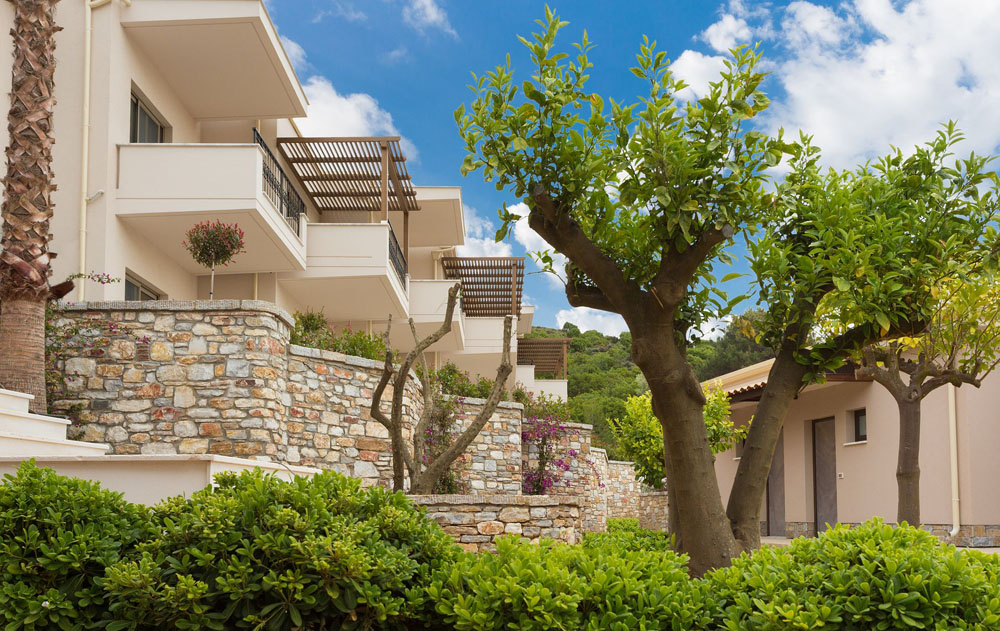
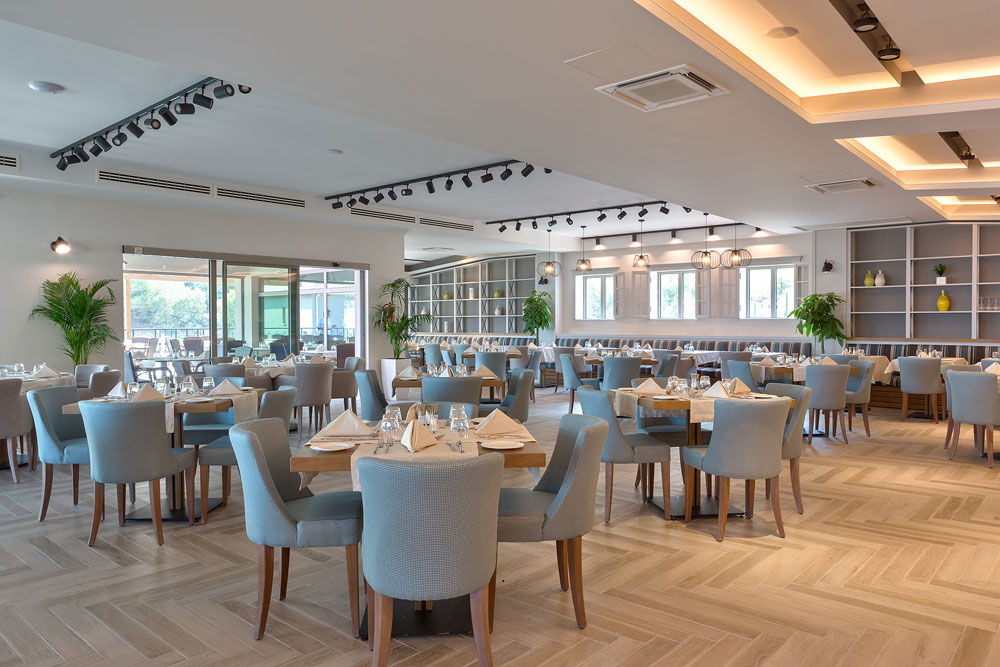
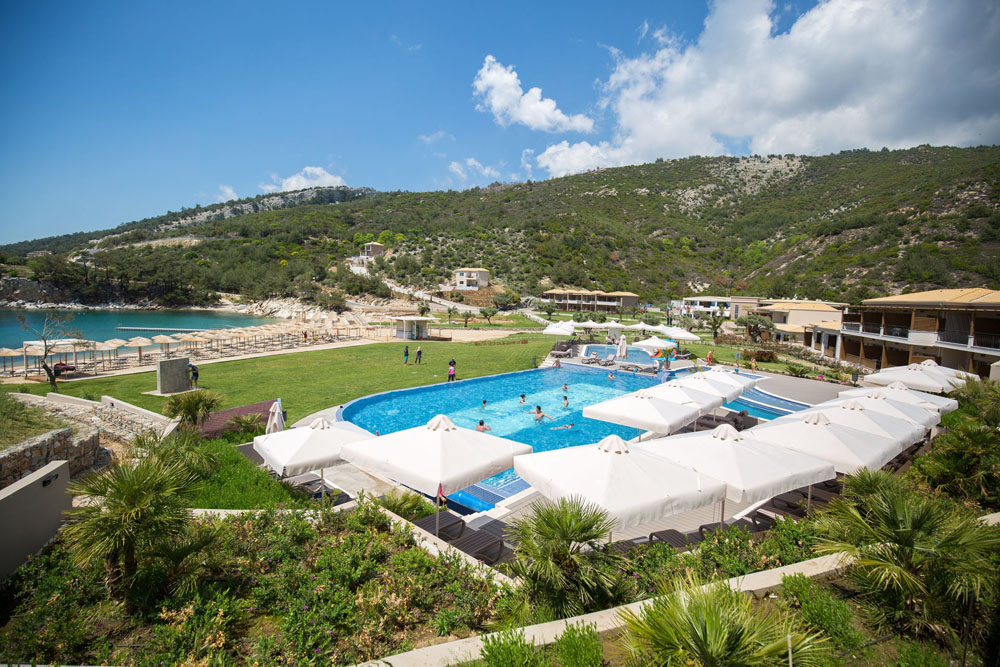
The unit consists of eighteen independent buildings. It is divided into zones so that the common functions do not cause disturbance in the rooms: The common function building includes a reception, shops, restaurant, cafe-bar, playground, hairdresser, rejuvenation center, gym and other auxiliary spaces. The accommodation buildings consist of rooms, suites and independent villas with exclusive use pools. The tavern, the open-BAR are located separately. The biological treatment plants were placed in a place without visual contact with the residential and dormitory buildings. Adult swimming pools and a playground, a children's playground, outdoor sports areas were designed, while the sites with archeological findings were included with a special study. The movement of vehicles is prohibited in the part of the rooms where the movement is done with electric vehicles. For this reason, a parking lot has been set up in a separate place. The infrastructure follows the aesthetics and colors of the place. For the complete adaptation to the textures of the landscape, colors in earthy shades of brown and local materials such as stone, marble were used. The architecture of the facades of the unit, following a decision of the KAS, maintained a completely simple line with restrictive conditions for the buildings in terms of height and location.
An innovation was the integration of archaeological finds in the daily experience of visitors. He set fundamental principles in the way the hotel was organized. In collaboration with the archeological service, a study was prepared which was updated during the construction and the existence of findings was included in the daily experience of the visitor. A traffic study was designed in such a way as to ensure the autonomy and free entry of the public, who are not customers of the unit, to the archeological site. With a clear demarcation of an archeological walk, the thematic tour is triggered, starting from the guard forts, passing through the production unit of the mill and ending in the residential area, with findings dating from prehistoric times and dating back to Roman times.
The archeological site has an active participation in the organization and composition and at the same time maintains its autonomy. The result is a single whole, functionally and aesthetically linked. It is an integral part of the hotel, as there are no visual boundaries and offers a pleasant walk. In addition, it creates extensions for innovative actions of promotion and promotion of local products of the island (olive-oil) from antiquity until today, giving an opportunity to upgrade the local tourist product.